Race Team Analogy
Think of it like running a high-performance race team.
The Old Way (Just Cost-Cutting)
Telling your driver to save fuel and go slower as a result.
Real FinOps
You have a dedicated engineer analysing fuel flow, a strategist planning pit stops, and a driver focused on speed. Together, they decide how to run the fastest race within the fuel budget. The goal is winning, not just saving fuel.
Let's break down what that really means:
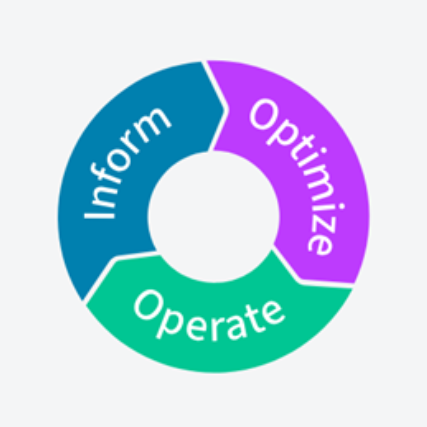
- It's a Framework: A repeatable, structured process (Inform, Optimise, Operate) with defined roles and responsibilities. It's not a one-time project.
- It's a Cultural Practice: It requires collaboration, not conflict. Finance, engineering, and business teams share a common language and goals.
- Its Goal is Business Value: Yes, this includes cost efficiency, but also speed, quality, and innovation. The ultimate question is: "Are we getting the proper outcomes for what we're spending?"
FinOps as a Framework
Short History
The FinOps framework originated from the need to manage complex, variable cloud costs and has evolved into a comprehensive operational and cultural practice for all technology spend. It was formalised by the FinOps Foundation, which was founded in 2019 and later merged with the Linux Foundation.
It's incredible to see IT industry leaders come together to create processes, standards, and guides for doing things well.
FinOps Phases
1. Visibility & Attribution (Inform)
Everyone knows who is spending what and why. Costs are mapped to teams, products, or features, turning cloud spend from a mystery into actionable data.
2. Optimisation & Accountability (Optimise)
Teams own their usage and have clear levers to manage it. Finance no longer acts as a gatekeeper but as an enabler of intelligent trade-offs.
3. Review & Continuous Improvement (Operate)
Regular reviews turn insights into decisions. The question isn't "what did we spend?" but "what value did we get for that spend — and how can we increase it next sprint?"
This creates a cycle of visibility → accountability → improvement, making cloud investment predictable, explainable, and trusted.
"FinOps is an operational framework and cultural practice that maximises the business value of the cloud."
FinOps Maturity Levels
Like any operational practice, FinOps matures over time, and that's by design. You don't jump straight to automation and predictive insights. You grow into them through three key phases:
Crawl – Establish Visibility
At this stage, the goal is to see and understand the spend. Teams start tracking usage by business unit or product, introducing tagging standards, and setting a shared language for cost discussions.
Walk – Build Accountability
Once visibility is achieved, teams start using that data to act. They align on budgets and KPIs, set up showback/chargeback models, and initiate continuous cost optimisation practices.
Run – Optimise for Business Value
In the most mature stage, FinOps becomes embedded in decision-making. Cloud investments are dynamically adjusted based on ROI, real-time insights, and forecasts. Teams use automation, governance policies, and feedback loops to refine cloud efficiency continuously.
Each stage builds on the previous one, moving from awareness to accountability to true operational excellence. The maturity journey isn't about perfection; it's about momentum and learning.
Bridging the Gap
At Koritsu AI, we see many organisations stop at the reporting layer (for those who have started). They buy a tool and call it FinOps, but miss the cultural and procedural foundation. True maturity comes from embedding FinOps as a framework that the tool enables:
- Platform = automation, insights, governance.
- People = ownership, collaboration, clear roles.
- Process = informed decisions, structured reviews, measurable outcomes.
That's how you create cloud value that scales sustainably.
This is why at Koritsu AI, we don't just give you a platform that provides cost visibility and savings recommendations. We combine our FinOps platform with expert consulting to help you establish the right KPIs, processes, and culture. Our platform is just a tool in the grand scheme of things. The platform enables the framework; it doesn't replace it.
"Is your organisation treating FinOps as a cost-cutting drill or as a strategic framework for maximising cloud value?"
- Raphael Yoshiga