FinOps Inform · Cost Optimisation
Cloud cost culture for engineering teams: 2026 guide
Discover what cloud cost culture in engineering teams means. Learn how to implement it, enhance accountability, and improve decisions in 2026.

Cloud cost culture in engineering teams is the practice of treating cloud spending as a core engineering metric, giving engineers direct visibility and accountability over the costs their decisions create. Cloud cost management has become the top priority for engineering leadership in 2026, overtaking security concerns. That shift reflects a broader recognition: the cloud cost problem is not a finance problem. It is an engineering problem. When engineers understand what their code costs to run, they make better architectural decisions. This article explains what cloud cost culture means in practice, how to build it, and how engineering leaders can make it stick.
What is cloud cost culture in engineering teams?
Cloud cost culture is defined as the organisational habit of treating cloud expenditure as an engineering quality attribute, alongside performance and reliability. The industry term for this discipline is FinOps, specifically the engineering-led variant that transforms FinOps from a finance function into a core engineering discipline. The keyword phrase "cloud cost culture" captures the behavioural and cultural dimension of that shift.
The distinction matters. Traditional FinOps places cost ownership in a finance or central operations team. Engineering-led cost culture places it with the people writing the code and designing the infrastructure. Those people understand workload patterns, service dependencies, and architectural trade-offs. Finance teams do not. Giving engineers cost visibility at the point of decision is what separates a functioning cost culture from a dashboard nobody reads.
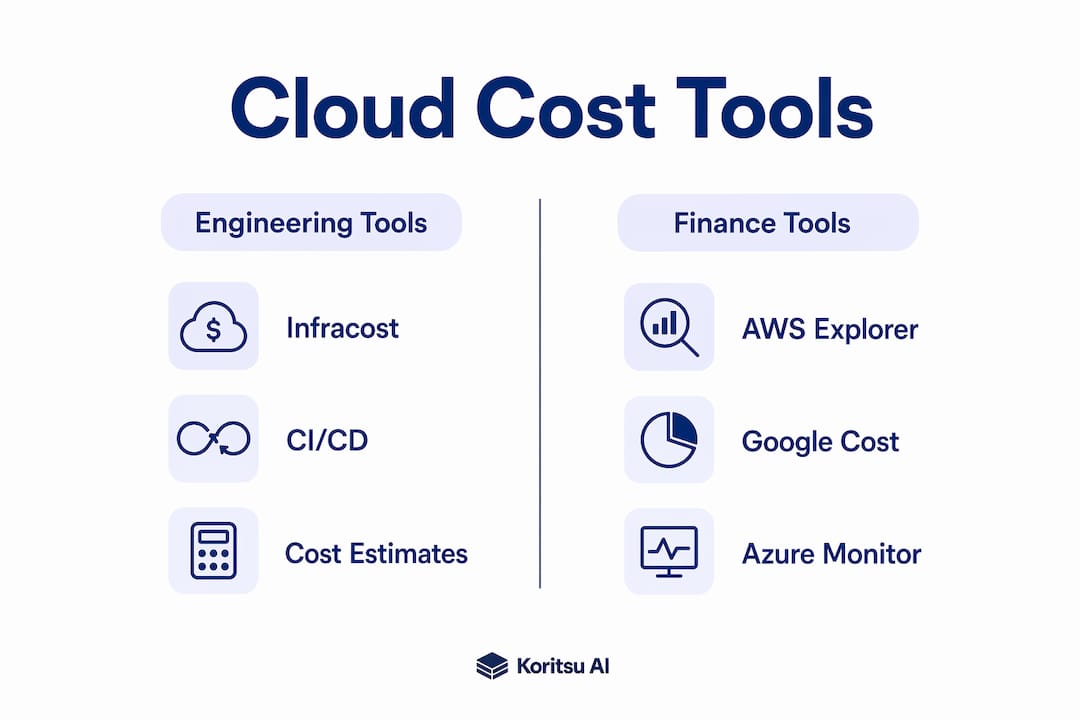
Tools like Infracost make this concrete. Infracost integrates cost impact estimates directly into CI/CD workflows, so engineers see the projected cost change on every pull request before it reaches production. That is the difference between reactive cost management and proactive cost ownership. Understanding cloud total cost of ownership at the leadership level reinforces why this engineering-first approach matters at scale.

How do engineering teams build and embed a cloud cost culture?
Building a cost culture requires deliberate organisational habits, not just tooling. The following practices consistently appear in teams that succeed.
- Shared accountability across teams. A shared accountability FinOps culture bridges finance, engineering, and product teams, preventing siloed and ineffective cost management. Cost targets should appear in sprint planning and architectural reviews, not just quarterly finance reports.
- Cost visibility in engineering workflows. Dashboards that only finance teams access do not change engineering behaviour. Cost data must appear where engineers already work: in pull request checks, observability stacks, and deployment pipelines.
- Celebrating cost wins publicly. Teams that reduce service costs by 40% through rightsizing attribute that success to openly celebrating cost wins in engineering meetings. Recognition motivates repetition.
- Avoiding finance-led policing. Cost culture fails when it becomes a system of approvals and budget gates. Engineers disengage when cost feels like a constraint imposed from outside rather than a quality signal they own.
- Treating cost like any other quality metric. Latency, error rate, and cost should sit side by side in your observability stack. When cost spikes, it signals something worth investigating, not just a bill to pay.
Pro Tip: Start your cost culture with one team and one service. Pick a team that already cares about performance. Show them their cost data in the tools they use daily. Let them own a cost reduction. Then share the result at your next engineering all-hands. That single story does more for adoption than any top-down mandate.
What role do tools and metrics play in supporting cloud cost culture?
Tools do not create cost culture on their own, but the right tools make culture sustainable. Without technical enablers, cost awareness depends entirely on individual discipline. That does not scale.
The four most important technical enablers are:
- CI/CD cost integration. Cost estimates integrated into CI/CD pipelines enable engineers to see cost impact on pull requests before deployment. Infracost is the most widely adopted tool for this. It attaches a cost diff to every infrastructure change, making cost a visible part of code review.
- Tagging and resource attribution. Without consistent tagging, you cannot attribute cloud spend to teams, services, or features. A tagging strategy is the foundation of cloud cost by team accountability. Tags should be enforced at the infrastructure-as-code level, not applied manually after deployment.
- Cost as a first-class observability metric. Cost should appear in the same dashboards as latency and reliability. AWS Cost Explorer, Google Cloud's Cost Management tools, and Azure Cost Management all support this, but the key is surfacing the data in your existing observability platform rather than a separate finance portal.
- Engineering-led commitment planning. Engineers outperform finance-led approaches by 30–60% on Reserved Instance and Savings Plan commitment planning. The reason is simple: engineers understand workload patterns and future architecture plans. Finance teams are working from historical spend data alone.
Pro Tip: Use a cloud hosting cost calculator during architectural design reviews. Estimating costs before you build is far cheaper than rightsizing after you deploy.
The table below summarises the key tools and their primary function in a cost-aware engineering workflow.
| Tool or practice | Primary function | Where it fits |
|---|---|---|
| Infracost | Pull request cost estimates | CI/CD pipeline |
| AWS Cost Explorer | Spend analysis and forecasting | Observability and reporting |
| Infrastructure-as-code tagging | Resource attribution by team or service | Deployment pipeline |
| Reserved Instances / Savings Plans | Commitment-based cost reduction | Architecture and capacity planning |
| Cost dashboards in observability stack | Real-time cost visibility | Engineering workflow |
What are common challenges when implementing cloud cost culture?
The most common failure mode is not technical. It is cultural. Finance-led FinOps initiatives that produce dashboards engineers ignore are the norm, not the exception. Cost visibility must be embedded in developer workflows and CI/CD pipelines, not in separate dashboards that require engineers to change their habits.
Several specific misconceptions consistently derail implementation:
- Engineers must become finance experts. They do not. Engineers need cost visibility at the decision point. They do not need to understand amortisation schedules or reserved capacity pricing models in depth.
- A central FinOps team solves the problem. Central teams can provide tooling and governance, but they cannot own cost culture. Culture lives in the teams writing the code.
- Cost reduction means slowing down development. This is the most damaging misconception. Treating cost as a signal of architectural health rather than a budget constraint actually improves architectural decisions. Cost spikes often indicate over-complexity or missing automation, which are engineering problems worth fixing regardless of budget.
- Siloed teams can manage costs independently. Without shared accountability across engineering, finance, and product, cost management becomes fragmented. One team's architectural decision creates costs another team is accountable for.
"Engineering ownership of cloud costs requires shifting mindset from policing to empowerment and visibility at the decision point." — Behind.cloud
The fix for most of these challenges is the same: bring cost data to where engineers already work, frame it as a quality signal, and remove the approval bottlenecks that make cost feel like a constraint rather than a metric.
How can engineering leaders scale a sustainable cloud cost culture?
Scaling cost culture requires leadership behaviour, not just process. Engineers take their cues from what leaders measure, celebrate, and include in planning conversations.
- Embed cost in sprint planning and architectural reviews. When cost appears on the agenda alongside performance and reliability, it signals that cost is a first-class concern. Ask "what does this cost to run?" in every architecture review. That question alone changes the conversation.
- Make cost wins public. Celebrating cost savings publicly creates motivation and sustainability in cloud cost culture. Announce cost reductions at engineering all-hands. Name the team and the approach. This creates social proof that cost ownership is valued.
- Align engineering, finance, and product on shared goals. Cost culture breaks down when teams optimise for different objectives. Engineering optimises for reliability, finance for budget, and product for velocity. Aligning cloud costs with business outcomes gives all three teams a shared frame of reference.
- Automate cost governance progressively. Start with visibility. Add CI/CD cost checks. Then introduce automated alerts for cost regressions. Automation reduces the cognitive load on engineers and makes cost awareness the path of least resistance.
- Protect development velocity. Cost culture that slows delivery will be abandoned. The goal is cost-aware decisions, not cost-first decisions. Engineers should be able to choose a more expensive architecture when the trade-off is justified, as long as that choice is visible and deliberate.
Pro Tip: Assign a cost champion in each engineering squad. This person does not police costs. They surface cost data in team discussions and own the relationship with the central FinOps function. Rotating the role every six months prevents it from becoming a burden and spreads cost literacy across the team.
Key takeaways
Cloud cost culture succeeds when engineers own cost as a quality metric, supported by visibility tools embedded directly in their existing workflows.
| Point | Details |
|---|---|
| Cost is an engineering metric | Treat cloud spend alongside latency and reliability, not as a separate finance concern. |
| Visibility at the decision point | Integrate cost estimates into CI/CD pipelines so engineers see impact before deployment. |
| Shared accountability matters | Finance, engineering, and product must share cost goals to prevent siloed and ineffective management. |
| Celebrate cost wins | Public recognition of cost reductions builds motivation and sustains cultural change over time. |
| Leadership drives adoption | Embedding cost in sprint planning and architectural reviews signals that it is a first-class priority. |
The mindset shift nobody talks about
Most articles on cloud cost culture focus on tooling. Infracost, tagging strategies, Reserved Instances. Those things matter, but they are not the hard part. The hard part is convincing engineers that cost is their problem to own, not a constraint handed down from finance.
In my experience working with engineering teams across AWS, Google Cloud, and Azure environments, the teams that build lasting cost culture share one characteristic: their leaders treat a cost spike the same way they treat a latency spike. They investigate it. They ask what it reveals about the architecture. They fix the underlying cause, not just the bill.
That reframe is powerful. A cost spike often signals over-complexity, missing automation, or a service that has grown beyond its original design. Fixing those things makes the system better, not just cheaper. When engineers understand that, cost ownership stops feeling like a burden and starts feeling like craft.
The other thing I have observed is that finance-led FinOps initiatives almost always stall. Not because the tools are wrong, but because engineers do not trust data they did not generate and do not own. The moment you put cost data inside the pull request, inside the observability stack, inside the sprint review, the conversation changes. Engineers start asking "why does this cost so much?" without being prompted. That is when you know the culture has taken hold.
Do not wait for a budget crisis to start. The teams that build cost culture proactively are the ones that avoid the crisis entirely.
How Koritsu AI can help your team build cost culture
Building a cost culture requires more than good intentions. It requires knowing where your money is actually going, and that is harder than it sounds on AWS, Google Cloud, or Azure.
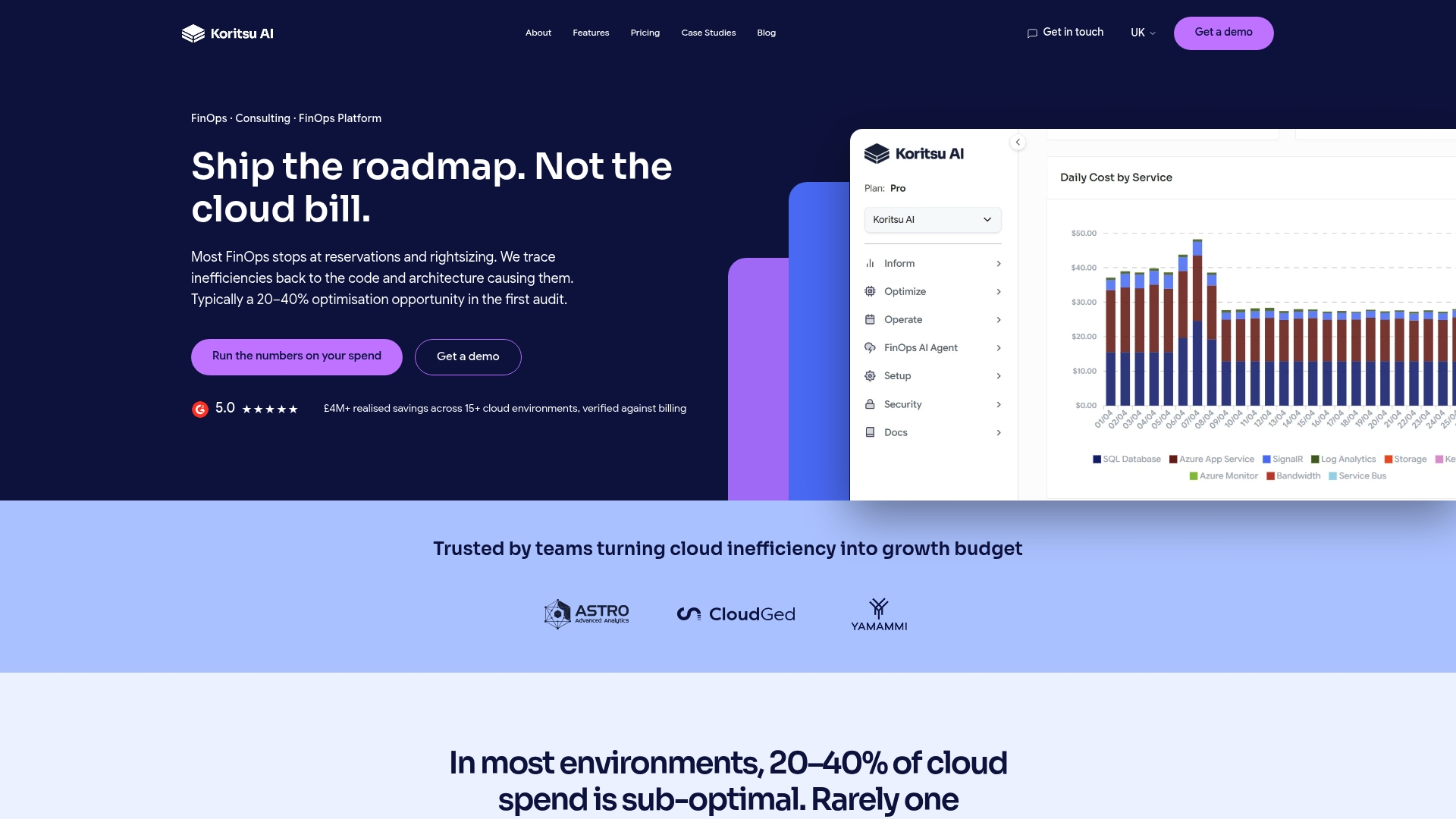
Koritsu AI combines an AI platform with hands-on expert advice to surface exactly where engineering decisions are creating unnecessary spend. The results speak for themselves. One financial services client achieved a 96% reduction in AWS Lambda costs by addressing inefficiencies buried in how their functions were built and configured. A UK bidding platform achieved a 52% reduction in cloud costs through targeted infrastructure changes. Koritsu AI starts with a free assessment and only charges when savings are found. If you are ready to give your engineering team the cost visibility they need, that is the right place to start.
FAQ
What is cloud cost culture in engineering teams?
Cloud cost culture is the practice of treating cloud spending as a core engineering quality metric, giving engineers direct visibility and accountability over the costs their architectural decisions create. It is the engineering-led dimension of the FinOps discipline.
How is cloud cost culture different from traditional FinOps?
Traditional FinOps places cost ownership in a central finance or operations team. Cloud cost culture embeds cost visibility and accountability directly within engineering teams, at the point where spending decisions are made.
What tools support cloud cost culture in engineering workflows?
Infracost integrates cost estimates into CI/CD pull requests, while AWS Cost Explorer, Google Cloud Cost Management, and Azure Cost Management provide spend analysis. Consistent infrastructure-as-code tagging is the foundation for attributing costs to specific teams and services.
Why do finance-led cloud cost initiatives fail with engineering teams?
Finance-led initiatives typically produce dashboards that engineers do not use because the data sits outside their existing workflows. Cost visibility must be embedded in developer workflows and CI/CD pipelines to change engineering behaviour.
How do you measure the success of a cloud cost culture programme?
Track cost per feature, cost per deployment, and the frequency of cost regressions caught in CI/CD before production. Teams with a strong cost culture also show measurable reductions in idle resource spend and improved Reserved Instance coverage rates over time.