FinOps Inform · Cost Optimisation
Common cloud reserved instance mistakes to fix now
Discover the common cloud reserved instance mistakes that cost you money. Learn how to fix them and optimize your cloud spending effectively.

Reserved instances are billing discounts applied hourly against eligible cloud usage, not physical capacity held aside for you. That distinction matters enormously, because most cloud reservation pitfalls stem from treating them as the latter. The common cloud reserved instance mistakes covered here cost engineering teams real money: wasted commitments, stranded capacity, and coverage gaps that on-demand rates quietly fill. The fixes are not complicated, but they do require discipline, data, and a clear operational cadence. Get those three things right, and reserved instances become one of the most reliable levers for reducing cloud spend.
1. What are the most frequent mistakes when purchasing reserved instances?
Purchasing errors are the root cause of most wasted reservation spend. They happen before a single instance runs, which makes them particularly costly to unwind.
The most damaging purchase mistake is committing without sufficient usage history. Analyse at least 60 days of historical usage data before making any commitment. Sixty days captures enough variation in workload patterns to reveal peaks, troughs, and genuine baseline demand.

A second common error is over-committing on term length. The discount gap between a 1-year and a 3-year reserved instance is only 10–15%. That modest saving rarely justifies locking in a 3-year commitment when infrastructure roadmaps shift every few quarters.
Other frequent purchasing errors include:
- Failing to rightsize before committing. Locking in an oversized instance family wastes money for the full term. Rightsize your fleet against real usage data before you purchase. The Koritsu AI platform surfaces rightsizing opportunities before you commit.
- Ignoring instance family flexibility. Standard Reserved Instances cannot be exchanged across instance families. If you expect to migrate to Graviton or a newer generation, that rigidity becomes a liability.
- Neglecting your serverless and containerisation roadmap. A planned move from EC2 to AWS Fargate or Lambda can abandon EC2 Savings Plans benefits entirely if the reservation was not adjusted beforehand.
- Buying zonal instead of regional scope. Regional Reserved Instances apply the discount across all availability zones within a region, giving you far more flexibility than zonal reservations.
Pro Tip: Target 70–80% reserved instance coverage for production environments and leave 20–30% on-demand to absorb fluctuation. Committing beyond that threshold without certainty is where waste begins.
2. How does underutilisation affect reserved instance value?
Underutilisation is the most visible sign of a reservation gone wrong. A reserved instance you are not using still costs you money every hour of every day.
The threshold to watch is 80%. Utilisation below 80% signals wasted spend and warrants immediate investigation. That figure is not arbitrary: it reflects the point at which the discount no longer offsets the commitment cost relative to on-demand pricing.
Monitoring underutilisation requires a structured approach:
- Set utilisation alerts at 80%. Configure your cloud provider's native cost tooling to alert you when any reservation drops below this threshold. Catching it early limits the damage.
- Review utilisation monthly. A monthly cadence gives you enough data to distinguish a genuine trend from a short-term anomaly. Weekly reviews create noise; quarterly reviews miss problems too late.
- Modify or exchange underperforming reservations. Convertible Reserved Instances can be exchanged for a different instance type, operating system, or tenancy. Use that flexibility before the term expires.
- Sell unused capacity on the marketplace. AWS's Reserved Instance Marketplace allows you to list Standard RIs you no longer need. You will not recover the full cost, but you will recover something.
- Audit your allocation logic. AWS applies RI credits dynamically by instance family and region. If your reservation is not covering what you expect, the allocation logic may be the cause, not the utilisation rate itself.
Pro Tip: Build a simple dashboard that shows reservation utilisation alongside on-demand spend for the same instance family. The gap between the two tells you exactly where your coverage model is leaking.
3. What lifecycle management mistakes lead to lost savings?
Lifecycle management errors are quieter than purchasing mistakes, but they compound over time. The most common is treating reservations as a once-a-year procurement event rather than an ongoing operational responsibility.
Reservation management requires a quarterly review cadence, not an annual one. Workloads change, teams grow, and architecture decisions shift. A reservation that was perfectly sized in january may be redundant by april.
The most damaging lifecycle mistakes include:
- Missing renewal dates. Reserved instances expire without warning if you do not track them. Set calendar reminders at 90 days, 60 days, and 30 days before expiry. A coverage gap of even a few days reverts you to on-demand pricing.
- No named owner. Reservations without a clear owner get neglected. Assign one person or team with explicit authority to modify, exchange, or cancel reservations. Shared ownership is no ownership.
- Ignoring new workload patterns. AI inference workloads, for example, have very different compute profiles from traditional web applications. Reservations built for one profile will not serve the other efficiently.
- Failing to account for migration timelines. If your team is planning an instance family upgrade or a move to a new architecture, that timeline must feed directly into your reservation decisions. Buying a 1-year commitment six months before a planned migration is a cloud instance cost mistake that is entirely avoidable.
- No cross-team communication. Engineering, finance, and platform teams often make decisions in isolation. A reservation purchased by one team can be rendered useless by an architectural decision made by another.
4. What reservation types and payment strategies reduce risk?
Choosing the wrong reservation type is a structural mistake that limits your ability to respond to change. The right choice depends on how predictable your workloads are.
| Reservation type | Flexibility | Discount depth | Best for |
|---|---|---|---|
| Standard Reserved Instance | Low | Highest | Stable, predictable workloads |
| Convertible Reserved Instance | Medium | Moderate | Workloads likely to change instance family |
| Compute Savings Plan | High | Moderate | Mixed or evolving compute portfolios |
Standard Reserved Instances deliver the deepest discounts but lock you into a specific instance type. Convertible Reserved Instances trade some discount depth for the ability to exchange across instance families. Compute Savings Plans apply across EC2, Fargate, and Lambda, making them the most flexible instrument available.
Paying a 10% flexibility premium for a Compute Savings Plan is often worth it when your workload mix is shifting. Rigid Standard RIs can leave you with stranded capacity that costs more to hold than the discount was worth.
On payment terms, start with 1-year commitments. The discount gap between 1-year and 3-year terms is only 10–15%, and the risk reduction from a shorter commitment far outweighs that difference during periods of infrastructure change. Use No Upfront payment options during your initial learning phase to reduce financial exposure while you validate your usage patterns.
Stacking reserved instances with Spot instances for burst capacity is a well-established pattern. Reserve your baseline, and let Spot absorb demand spikes. That combination captures most of the discount benefit while preserving the flexibility to scale.
5. How to integrate reservation planning with migrations and new technology
Reservation planning cannot happen in isolation from your infrastructure roadmap. A commitment made without visibility into planned migrations is a reservation planning issue waiting to materialise.
Key considerations for roadmap-aware reservation planning:
- Account for instance family upgrades. If your team plans to adopt Graviton processors or move to a newer EC2 generation, factor that timeline into your term length. A Standard RI on an older instance family becomes worthless the moment you migrate.
- Model your containerisation roadmap. Moving workloads from EC2 to AWS Fargate or Lambda changes which reservation instruments apply. Compute Savings Plans cover Fargate; Standard EC2 RIs do not. Plan accordingly.
- Involve AI and ML teams early. AI inference and training workloads often require GPU instances with very different pricing dynamics. Those teams need a seat at the reservation planning table, not an afterthought consultation.
- Choose flexibility when change is likely. When your roadmap is uncertain, the Compute Savings Plan's flexibility is worth the modest premium. Stranded capacity on a rigid commitment costs far more than the discount you gave up.
- Review reservations before any major migration. Treat every significant architecture change as a trigger for a reservation audit. This is not optional; it is the discipline that separates teams who save money from teams who think they are saving money.
Key takeaways
Reserved instance mistakes are avoidable when teams treat reservations as a continuous forecasting discipline rather than a one-time purchase decision.
| Point | Details |
|---|---|
| Analyse before committing | Use at least 60 days of usage data and target 70–80% coverage for production workloads. |
| Monitor utilisation monthly | Set alerts at 80% utilisation and act on underperforming reservations before the term expires. |
| Establish quarterly reviews | Treat reservations as a living operational cadence, not an annual procurement event. |
| Match type to workload stability | Use Compute Savings Plans for evolving workloads; Standard RIs only for fully stable, predictable demand. |
| Assign clear ownership | One named owner with modification authority prevents reservations from being silently neglected. |
Reservations are a forecasting problem, not a shopping exercise
I have seen the same pattern repeatedly. A team does a thorough job purchasing reservations in january, feels good about the savings, and then does not look at them again until the following year. By then, the workload has changed, the instance family is outdated, and half the reservations are covering nothing useful.
The uncomfortable truth is that reservation strategies are forecasting problems disguised as purchasing decisions. The purchase is the easy part. The hard part is maintaining the operational rhythm that keeps those commitments aligned with reality. Quarterly reviews, named ownership, and cross-team communication are not nice-to-haves. They are the mechanism by which reservations actually deliver savings.
I also think the industry underestimates how often the flexibility premium pays for itself. Teams resist paying 10% more for a Compute Savings Plan because the Standard RI discount looks better on a spreadsheet. But a stranded Standard RI after a migration costs far more than that 10% ever would have. Accepting a modest premium for flexibility is not a compromise. It is risk management.
The teams I have seen get this right share one trait: they treat their reservation portfolio the way a finance team treats a loan book. They know what they own, when it expires, and what it is covering. That level of visibility is achievable with the right tooling and the right cadence.
How Koritsu AI helps you avoid costly reservation errors
Cloud cost problems are rarely obvious. They accumulate quietly in underutilised reservations, mismatched instance types, and missed renewal dates.
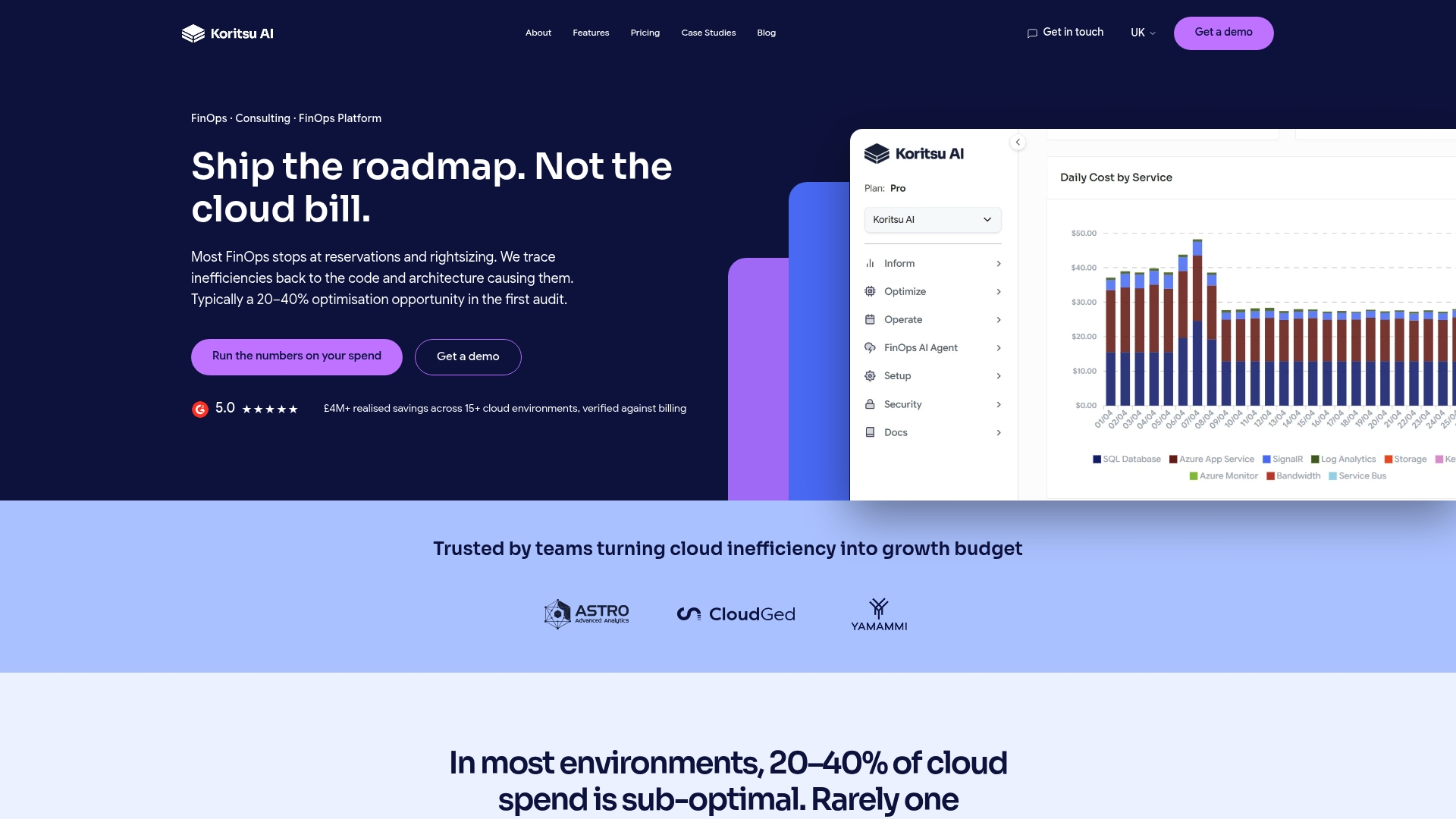
Koritsu AI combines continuous spend analysis with hands-on expert advice to surface exactly where your reservation strategy is leaking money. The AI agent Kori identifies underutilised commitments, rightsizing opportunities, and coverage gaps before they compound. Koritsu's specialists then help your team act on those findings. The results speak for themselves: one client achieved a 96% reduction in Lambda costs, and a UK bidding platform cut its overall cloud spend by 52%. Koritsu only charges when savings are delivered. Start with a free assessment at Koritsu AI.
FAQ
What is a reserved instance?
A reserved instance is a billing discount applied hourly against eligible on-demand usage, not a physical block of capacity. Understanding this distinction is critical to managing AWS billing outcomes correctly.
How much data do I need before buying a reserved instance?
Analyse at least 60 days of historical usage before committing. That window captures enough workload variation to identify a reliable baseline for your reservation.
What utilisation rate signals a wasted reserved instance?
Utilisation below 80% indicates the reservation is not delivering value relative to its cost. Set automated alerts at this threshold and review monthly.
Should I choose a 1-year or 3-year reserved instance term?
Start with 1-year terms. The discount difference between 1-year and 3-year commitments is only 10–15%, and the shorter term significantly reduces the risk of stranded capacity during infrastructure changes.
What is the difference between a regional and a zonal reserved instance?
A regional reserved instance applies the discount across all availability zones within a region. A zonal reserved instance applies only to a specific zone, which limits flexibility and increases the risk of underutilisation.