FinOps Inform · Cost Optimisation
Why cloud discounts alone are insufficient for real savings
Discover why cloud discounts alone are insufficient for real savings. Learn how to optimize your cloud costs effectively for 2026.

Cloud discounts are defined as pre-negotiated pricing reductions offered by cloud providers in exchange for usage commitments, and they do not solve your cloud cost problem. They reduce the unit price of resources you have already decided to consume. The real cost problem sits one level deeper: in how your infrastructure is built, how your workloads behave, and whether anyone is watching either. Relying solely on discounts creates a false sense of security that causes engineering teams to stop looking for the inefficiencies that are actually draining budget. Understanding why cloud discounts alone are insufficient is the starting point for any serious cost management programme in 2026.
The industry term for the broader discipline is FinOps, which stands for cloud financial operations. FinOps treats cloud cost as a shared responsibility across engineering, finance, and product teams. Discounts are one tool within FinOps, not a substitute for it.
Why cloud discounts alone are insufficient in practice
Cloud providers offer four main pricing models: On-Demand, Reserved Instances, Savings Plans, and Spot Instances. Each targets a different usage pattern, and understanding these models is the prerequisite for any commitment decision. Reserved Instances and committed use discounts require you to lock in a specific resource type, region, and term, typically one or three years. That rigidity is the first structural problem.

Cloud usage is not static. Workloads migrate between regions, teams spin up new services, and application architectures change with every sprint cycle. Committed resources are billed monthly regardless of whether you use them fully. A commitment made in january for a workload that moves to a different region by april becomes dead spend, and the discount that looked attractive in the planning meeting is now a liability.
The second structural problem is overprovisioning. Teams provision generously to avoid performance incidents, then apply discounts on top of that inflated baseline. The discount reduces the price of waste, not the waste itself. Overprovisioning to avoid performance issues is one of the most common sources of unnecessary cloud spend, and no discount contract addresses it.
- Reserved Instances lock in machine family and region, limiting flexibility when architectures change.
- Savings Plans offer more flexibility but still require a minimum spend commitment that may not match actual usage.
- Spot Instances deliver the deepest discounts but are unsuitable for latency-sensitive or stateful workloads.
- Volume discounts reward aggregate spend, not efficient spend, so they can incentivise the wrong behaviour.
Pro Tip: Before signing any discount commitment, map your actual usage patterns over the prior 90 days. Identify which workloads are stable enough to commit and which are too variable. Committing on variable workloads is the fastest way to turn a discount into a cost.
How do multi-cloud environments complicate cost management beyond discounts?
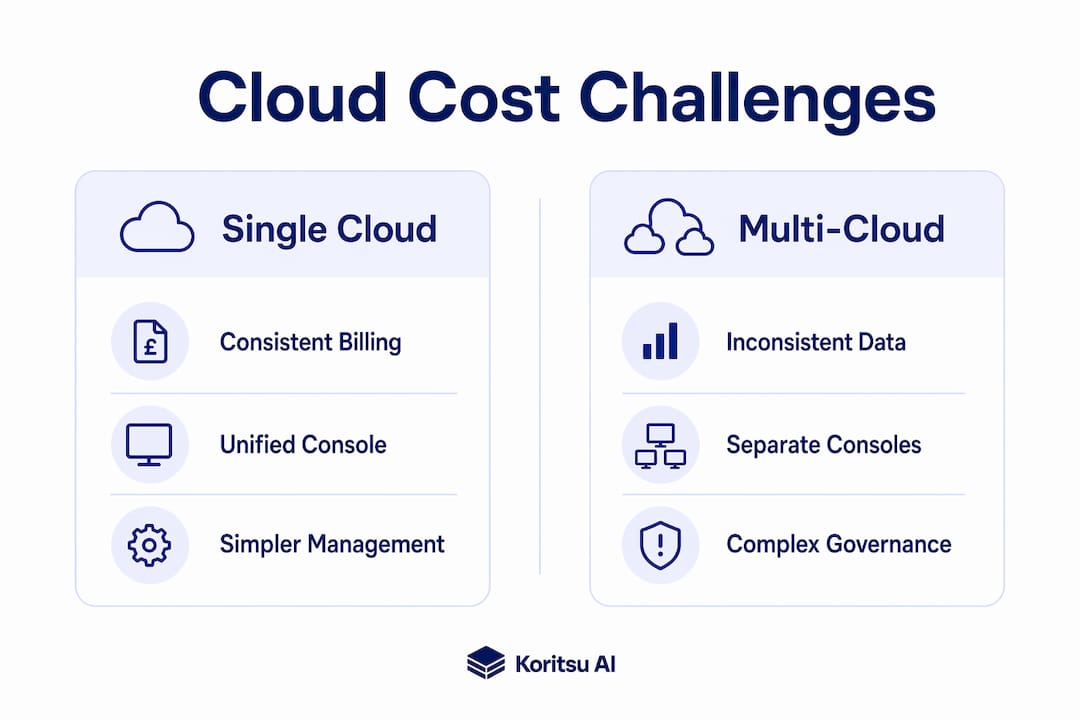
Multi-cloud adoption has made cost visibility structurally harder. 92% of enterprises use multiple cloud providers, with the average organisation running across 4.8 providers. That scale means billing data arrives in different formats, with different taxonomies, and with no shared unit cost model. A discount negotiated with AWS tells you nothing about what you are spending on Google Cloud or Azure for the same workload category.
The core challenge is normalisation. Each provider structures its billing data differently. Mapping AWS cost allocation tags to Google Cloud labels to Azure resource groups requires a governance layer that most organisations have not built. Without it, cross-cloud cost accountability is impossible, and discounts applied in one provider's console are invisible to the finance team trying to model unit economics across the estate.
Kubernetes adds another layer of complexity. Container workloads do not map cleanly to the resource boundaries that discount contracts use. 49% of teams report increased costs related to Kubernetes environments because of overprovisioning and sprawl. A Reserved Instance commitment covers a virtual machine, but the containers running on that machine may be wildly underutilised, and no discount contract surfaces that fact.
The table below shows how cost visibility breaks down across a typical multi-cloud setup:
| Cost challenge | Single cloud | Multi-cloud |
|---|---|---|
| Billing data format | Consistent | Inconsistent across providers |
| Tagging and allocation | One taxonomy | Multiple conflicting taxonomies |
| Discount visibility | Centralised | Siloed per provider |
| Unit cost modelling | Manageable | Requires normalisation layer |
| Kubernetes spend attribution | Partial | Very limited without tooling |
Discounts negotiated in isolation with each provider do not compound. They sit in separate consoles, governed by separate teams, with no shared view of whether the commitments collectively make sense for the business.
Why operational inefficiencies undermine the value of discounts
Operational drift is the gradual misalignment between the infrastructure you committed to and the infrastructure you are actually running. It is invisible to standard billing dashboards, and it can cause margin loss for months before anyone notices. A workload migrates to a new region. A service is deprecated but its reserved capacity is not. A new team spins up resources outside the committed family. Each change is small. The cumulative effect is significant.
Demand variability compounds the problem. Seasonal traffic spikes, time-of-day patterns, and batch processing windows mean that the "right" resource level changes constantly. A commitment sized for peak demand wastes money during off-peak hours. A commitment sized for average demand causes performance issues at peak. Neither scenario is solved by the discount itself. The discount simply applies to whichever wrong number you committed to.
The deeper issue is cultural. Once teams see discounted pricing, they often assume cost optimisation is handled. The discount becomes a proxy for efficiency, and the operational work of rightsizing, tagging, and reviewing usage stops. This is the most expensive mistake a CTO can make. Operational efficiency, not discount level, is the true driver of sustainable cost reduction.
Dashboards make this worse. Most cloud provider cost dashboards show spend against budget, not spend against optimal. They tell you whether you are over budget, not whether you are over-resourced. An engineering team running at 120% of a discounted commitment looks fine on a dashboard. An engineering team running at 40% utilisation on committed resources looks fine too. Neither is fine.
- Rightsizing: matching instance size to actual workload requirements, reviewed continuously, not at commitment time.
- Idle resource detection: identifying resources that are running but not serving traffic, which discounts do not flag.
- Tagging governance: ensuring every resource is tagged to a team, product, and cost centre so accountability is clear.
- Workload scheduling: shifting non-urgent batch jobs to off-peak windows to reduce peak resource requirements.
Pro Tip: Schedule a monthly cross-team review between your engineering leads and finance team. Compare committed resources against actual utilisation data. Any commitment running below 70% utilisation is a candidate for rightsizing or cancellation at the next renewal window.
What approaches complement discounts to achieve effective cost management?
Discounts work best when they are the last step, not the first. The correct sequence is: understand your usage patterns, remove waste, rightsize your resources, and then commit to what remains. Committing before you have done the operational work locks in inefficiency at a discounted rate.
The AWS Well-Architected Framework's cost optimisation pillar provides a structured approach. It covers architectural decisions that balance reliability, performance, and cost, reducing the overprovisioning that makes discounts less effective. Applying this framework before negotiating commitments means you are committing to a leaner baseline.
FinOps best practices add the governance layer. Cross-functional collaboration between finance, DevOps, and engineering is the mechanism that keeps commitments aligned with actual usage over time. Finance should not plan commitments without operational input. Engineering should not provision without cost accountability. The two functions need a shared model, updated continuously.
Automation is the enforcement mechanism. Infrastructure-as-code tools like Terraform and Pulumi allow you to encode cost constraints into the provisioning process itself. Anomaly detection tools surface drift before it compounds. Continuous monitoring of utilisation against commitment levels catches the misalignments that manual reviews miss.
The comparison below shows what changes when you move from a discount-only approach to a combined approach:
| Dimension | Discount-only approach | Discount plus operational controls |
|---|---|---|
| Baseline | Committed on current (often inflated) usage | Rightsized before commitment |
| Drift detection | None | Continuous monitoring |
| Accountability | Finance team only | Shared across engineering and finance |
| Visibility | Per-provider billing console | Normalised cross-cloud view |
| Outcome | Lower unit price on waste | Lower unit price on efficient usage |
You can also explore common compute inefficiencies to understand what operational waste looks like before you commit to any pricing tier. Knowing what you are paying for is more valuable than knowing what discount you received.
Key takeaways
Operational efficiency, not discount level, is the primary driver of sustainable cloud cost reduction. Discounts applied to an inefficient baseline reduce the price of waste, not the waste itself.
| Point | Details |
|---|---|
| Discounts do not remove waste | Fixed commitments reduce unit price but leave overprovisioned or idle resources fully billable. |
| Multi-cloud visibility is broken | 92% of enterprises use multiple providers, but billing data is siloed and non-comparable without a normalisation layer. |
| Operational drift is invisible | Billing dashboards do not surface misalignment between committed resources and actual workload patterns. |
| Commit after rightsizing | Negotiate discount commitments only after removing waste, not before, to avoid locking in inefficiency. |
| FinOps requires cross-team ownership | Finance and engineering must share a continuous cost model, not a one-time commitment plan. |
The discount trap is real, and I have seen it repeatedly
Every quarter, I speak with engineering leaders who are genuinely surprised by their cloud bill. They have Reserved Instances. They have Savings Plans. They negotiated hard with their account manager. And yet the bill is still climbing. The pattern is consistent: the discount was applied to a baseline that was never interrogated.
The uncomfortable truth is that a 30% discount on a 40% utilised estate is not a win. It is a smaller loss. The real work is in the utilisation number, not the discount percentage. I have seen teams spend weeks negotiating commitment terms and zero hours reviewing whether their Kubernetes node pools are sized correctly. The effort is completely inverted.
Cost ownership also needs to sit inside engineering culture, not just in a finance spreadsheet. When engineers do not see the cost of the resources they provision, they do not optimise for cost. Embedding cost visibility into deployment pipelines and sprint reviews changes that behaviour. It is a process change, not a technology change. Koritsu AI exists precisely because most organisations need both the continuous analysis and the expert guidance to make that process change stick. Understanding why environments over-scale is often the most clarifying conversation an engineering team can have.
How Koritsu AI addresses the gap discounts leave behind
Cloud discounts are a starting point, not a solution. The real savings sit in the operational layer, and finding them requires continuous analysis, not a one-time commitment review.
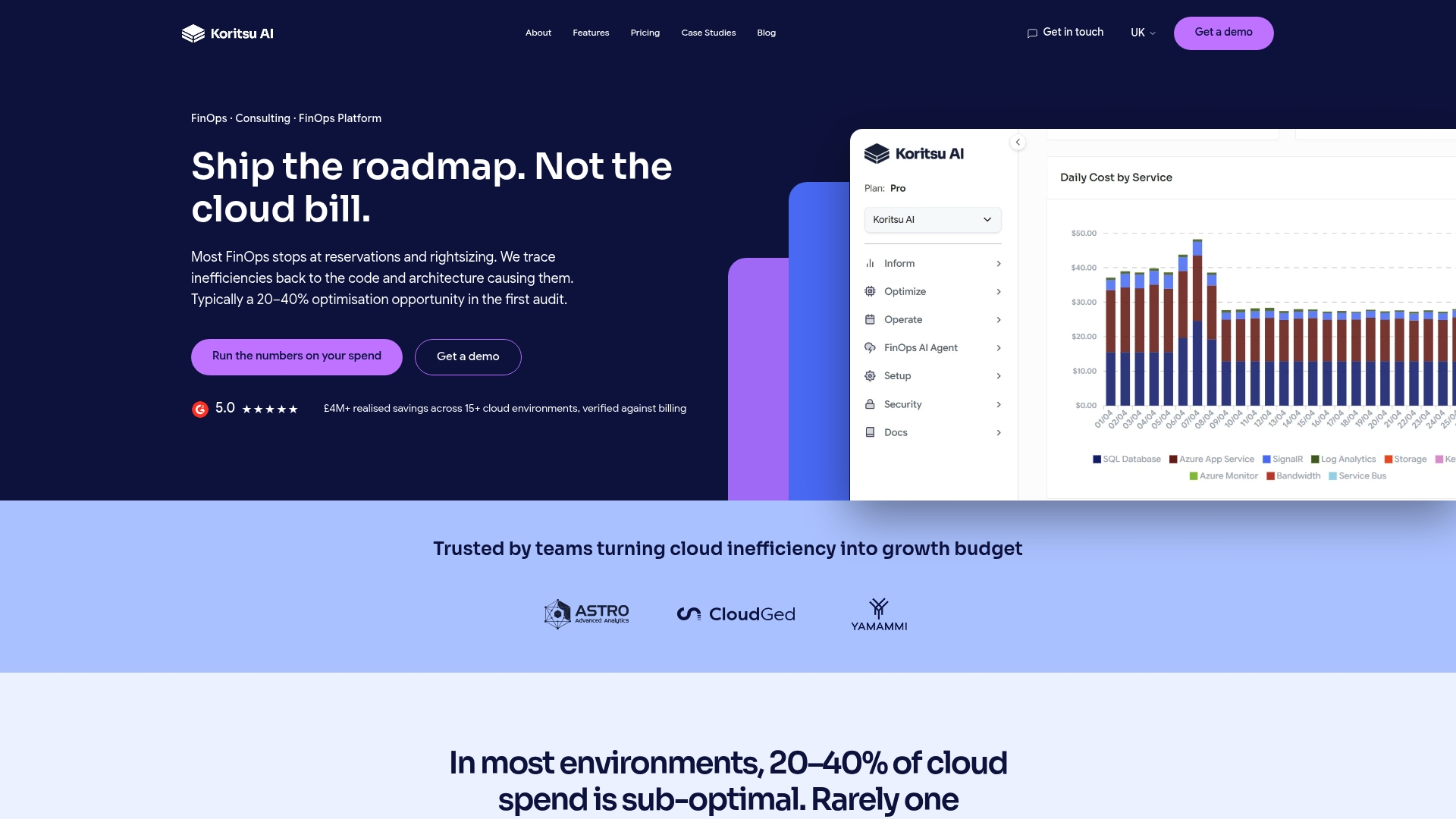
Koritsu AI combines an AI platform with hands-on expert advice to surface exactly where your cloud spend is misaligned with your actual usage. Kori, the AI agent, analyses your spending continuously and identifies drift, idle resources, and overprovisioned workloads across AWS, Google Cloud, and Azure. The specialists then help your engineering teams act on those findings. Clients start with a free cloud cost assessment and pay only from the savings Koritsu AI actually delivers. If you want to see what that looks like in practice, the UK bidding platform case study shows a 52% cost reduction achieved through operational optimisation, not discount negotiation.
FAQ
Why are cloud discounts alone insufficient for cost control?
Cloud discounts reduce the unit price of resources but do not address overprovisioning, idle spend, or operational drift. Applying a discount to an inefficient baseline reduces the price of waste, not the waste itself.
What is operational drift in cloud cost management?
Operational drift is the gradual misalignment between committed resources and actual workload patterns. It is invisible to standard billing dashboards and can cause undetected margin loss for months before it surfaces in financial reviews.
How does multi-cloud usage affect discount effectiveness?
Discount commitments are made per provider and sit in separate billing consoles. With 92% of enterprises running across multiple providers, there is no unified view of whether commitments collectively reflect actual usage, which makes cross-cloud cost accountability very difficult.
What should engineering teams do before committing to cloud discounts?
Teams should rightsize their resources and remove idle or overprovisioned workloads before negotiating any commitment. Committing to a leaner, accurately sized baseline means the discount applies to efficient spend rather than inflated usage.
What is FinOps and how does it relate to cloud discounts?
FinOps is the practice of shared financial accountability for cloud spend across engineering, finance, and product teams. Discounts are one tool within a FinOps programme, not a replacement for the continuous usage monitoring and cross-team governance that FinOps requires.