FinOps Inform
FinOps Business Case: Verify Savings in a 60 to 90 Day Pilot
Build a FinOps business case with bill verified savings, a pilot lasting 60 to 90 days, clear KPIs, and a practical prioritization rubric executives can use.

A FinOps business case must prove two things: a credible, measurable return on investment and a delivery plan that leadership can trust. The headline metric that matters most is realised savings verified against the actual bill, plus a defined payback period. Before writing a single slide, gather baseline billing data and nominate a 60 to 90 day pilot scope. That is the foundation everything else rests on.
TL;DR:
- Treat savings as realized only after they appear on two consecutive billing cycles; until then, label them forecasts rather than verified results.
- Use canonical billing exports, not console screenshots, and disclose tagging gaps; allocation figures based on partial coverage should never appear complete.
- Include protected engineering time alongside tooling and external support, because identified savings will not reach the bill unless someone has authority to implement fixes.
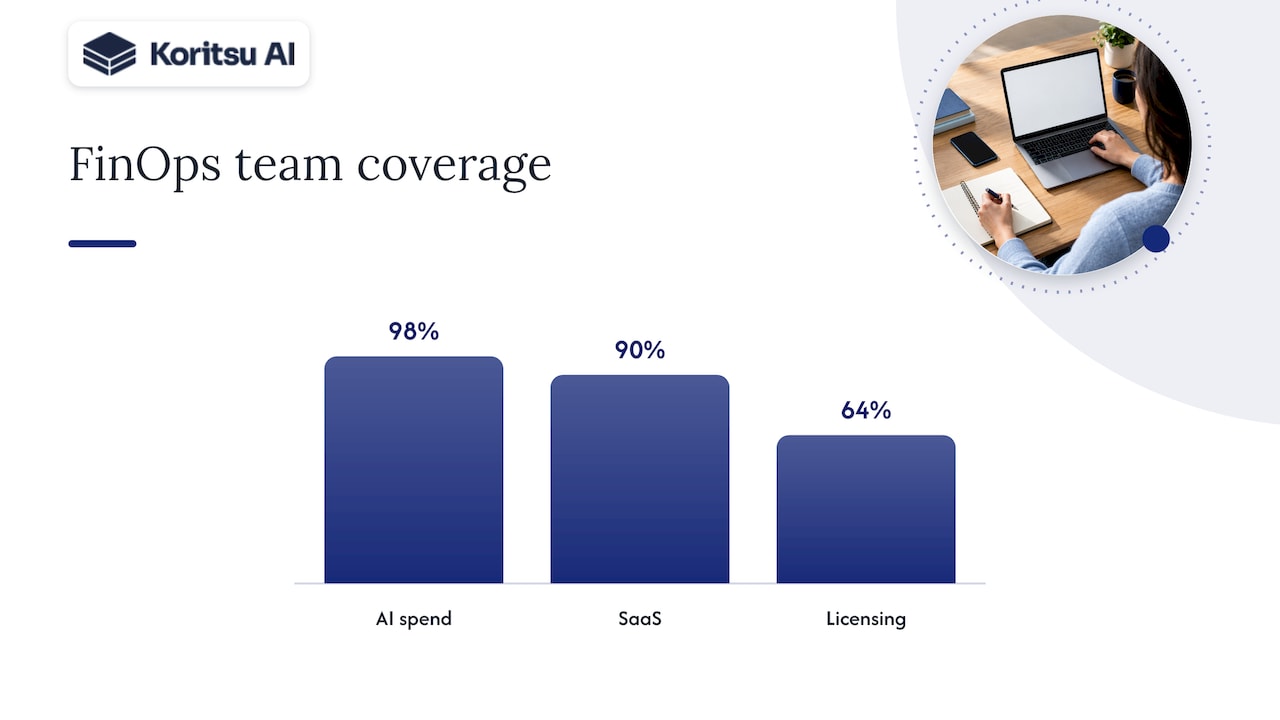
- The 2026 State of FinOps reports that 98% of teams manage AI spend, 90% manage SaaS, and 64% manage licensing.
- Present best, middle, and worst case savings scenarios instead of one forecast, and define the evidence required before expanding beyond the pilot.
What FinOps is now and why use the FinOps Framework
FinOps has moved well past "watch the AWS bill." The discipline now spans AI workloads, SaaS contracts and software licensing, and the organising structure behind most mature practices is the FinOps Framework, built around three iterative phases.
- Inform: establish visibility, allocate cost by team or service, and build the baseline your business case will quote.
- Optimize: identify and action savings opportunities, from rightsizing to commitment discounts to architectural fixes.
- Operate: embed the processes, automation and governance that keep savings in place after the initial push.
Each phase produces a measurable outcome a finance leader can check against the bill, not a dashboard metric that lives in isolation. That is precisely why the framework doubles as a business-case skeleton: Inform supplies your baseline and current-state numbers, Optimize supplies your benefit estimates, and Operate supplies your sustainment plan, the part most cases skip and most savings quietly leak from.
The scope question matters too. The State of FinOps 2026 data library reports that 98% of FinOps teams now manage AI spend, 90% manage SaaS, and 64% manage licensing. A business case written as if FinOps only touches raw compute will undersell the opportunity and read as outdated to anyone who has seen a recent AI invoice. Write the case to cover the full estate your organisation actually runs, not the estate FinOps used to cover five years ago.
Why a FinOps business case matters to executives
Executives do not fund frameworks. They fund outcomes they can defend to their own boards, which means your case has to answer their questions in their language, not FinOps vocabulary.
- Return and timeline: what do we get back, and by when does the pilot pay for itself?
- Governance: who owns this, who reports on it, and what happens when priorities compete?
- Risk: what could go wrong, and what is the downside case if savings come in lower than modelled?
- Strategic alignment: does this help us negotiate better AI and vendor commitments, or just trim a line item?
The framing matters as much as the numbers. A case pitched as cost policing invites resistance from engineering leaders who hear "budget cuts" and dig in. A case pitched as value enabling, freeing capacity to fund AI initiatives, better vendor terms, or new headcount, invites sponsorship instead. The State of FinOps 2026 data library notes that 78% of FinOps teams now report into the CTO or CIO, which tells you where the sponsorship conversation should start.
A workable executive summary line reads something like this: "This pilot targets a conservative payback within two quarters and builds the allocation model we need to negotiate our next AI commitment from a position of actual usage data, not guesswork." That single sentence covers return, timeline and strategic relevance in one breath.
Core components of the business case and how to quantify them
Every credible FinOps business case contains the same skeleton, even when the numbers underneath differ wildly by organisation.
- Executive summary: the ask, the return, the timeline, in under 150 words.
- Current-state baseline: total spend, allocation coverage, and the specific inefficiencies you have already spotted.
- Investment required: tooling, people time, and any external support, costed as one combined line.
- Benefit estimate by category: rightsizing, commitment discounts, waste elimination, licensing consolidation.
- Financial metrics: ROI, payback period and a sensitivity range.
- Risks and mitigations: what could reduce the benefit, and your response.
The baseline is where most cases fall apart before they start. Pull canonical billing exports rather than console screenshots, check tagging coverage before you trust any allocation figure, and flag gaps honestly. A baseline built on 40% tagged spend should say so, not extrapolate as if coverage were complete.
Benefit estimates should be built by category and kept conservative. Rightsizing and idle resource elimination tend to be the fastest wins because they require no contractual renegotiation. Commitment-based discounts take longer to model because they depend on usage stability. Licensing and SaaS consolidation often hides the largest single-line opportunity but needs contract review time most teams underestimate.
Forrester's guidance on building the case is blunt on this point: a business case that covers tooling but skips people and change management will only realise part of the theoretical savings on the table, because the people doing the engineering work are what actually ships the fix. Treat people and tooling as one combined investment line, not two competing asks.
Worked example (illustrative only): say a mid-size company spends £2,000,000 a year on cloud. Keep your own numbers this simple in the first draft. Complexity can come later, once the baseline is proven.
Pro Tip: Build your ROI model in a shared spreadsheet, not a slide, so finance can stress-test your assumptions themselves rather than taking your word for them.
Team structure and governance to support the plan
A business case that shows strong numbers but no delivery model invites an obvious question: who is actually going to do this?
- Centralised: one FinOps team owns the practice across the business. Fastest to stand up, but can become a bottleneck at scale.
- Decentralised: each engineering team owns its own cost outcomes. Scales well but risks inconsistent standards.
- Hub and spoke: a small central team sets standards and tooling, while embedded members in each business unit execute. Most mature practices land here eventually.
Budget for a small set of core roles even in a pilot: someone who owns reporting and allocation, an engineer with authority to action rightsizing and architectural fixes, and a sponsor senior enough to break ties when priorities conflict. The FinOps Foundation's guidance on team structures notes that practices reporting into CTO or CIO tend to carry more influence over architecture and procurement decisions, which is worth factoring into where you place the reporting line.
Funding usually comes from one of three routes: dedicated headcount, reallocated time from an existing engineering team, or short-term external support to get the pilot moving without waiting for a hiring cycle. Each route has a different speed-to-start, and your business case should name which one you are actually requesting rather than leaving it implied.
Prioritisation rubric: choose pilot use cases that prove value quickly
With finite FinOps effort and a sceptical audience, the pilot has to win fast. A simple two-axis rubric, scoring business value against technical feasibility, keeps the selection honest rather than political.
- Score business value from 1 to 5: how much spend does this use case touch, and how directly does the fix hit the bill?
- Score technical feasibility from 1 to 5: how much engineering effort, how much risk of disruption, how many dependencies?
- Plot both scores: high value, high feasibility items go first; high value, low feasibility items go into the roadmap; low value items get parked.
This approach mirrors what practitioners recommend for staging AI and other complex use cases, where cost mapping is harder and effort needs to go where it is best spent. A quick win might be eliminating idle non-production resources. A strategic bet might be restructuring commitment discounts across a multi-account estate. Fold your scored list directly into the business case timeline so the pilot scope is visibly the highest-value, most feasible slice, not an arbitrary starting point.
Forecasting, budgeting and the timeline to scale
Executives fund pilots that show their working, not pilots that promise a number and ask for faith.
- Pilot budget: tooling or platform cost, people time, and any external support, shown as recurring versus one-off so finance can see what disappears after the pilot ends.
- Scale budget: what the ongoing practice costs once proven, typically a smaller recurring line than the pilot itself.
- Milestones: a pilot phase (60 to 90 days) with a defined savings target, a validate phase that confirms the savings held against the actual bill, and a scale decision gate.
- Sensitivity: present best, mid and worst-case savings ranges rather than a single number, so a miss on the low end still looks like a win rather than a failure.
Presenting a conservative range tied to a short timeframe tends to raise approval rates, because it gives the approver room to say yes without betting the budget on an optimistic single figure. Define the funding trigger for scale explicitly: for example, "scale to the full estate once the pilot shows savings realised and verified against two consecutive billing cycles."
Measuring success: KPIs to include and how to report them
Finance and engineering will each want different proof, and your business case should speak to both without running two separate reports.
- Realised savings on the bill: the actual reduction shown in billing data, not a forecast or a dashboard estimate.
- Forecast accuracy: how close your predicted spend was to actual spend, which builds trust for every case after this one.
- Allocation coverage: the percentage of spend that is tagged and attributable to a team, service or feature.
Confidence matters as much as the number itself. A saving is only "realised" once it has shown up on two consecutive billing cycles; anything earlier is a forecast, and the business case should say so plainly rather than implying certainty it has not earned. The State of FinOps 2026 data library shows that AI spend commonly adds to budgets rather than replacing other spend, which means training and inference costs need separate tracking in your reporting, not a single blended AI line.
Cadence should map to audience: a board-level summary once a quarter, a CTO or finance update monthly, and an operational review weekly or biweekly during the pilot itself. Each audience needs the same underlying numbers, just a different level of detail.
Practical next step and how a short assessment turns the plan into a pilot
A business case on paper is a hypothesis. The fastest way to turn it into something fundable is a short, structured look at your actual bill before you commit to a full pilot.
- Run a 30 to 60 minute intake covering your top 10 services by spend, your top 10 accounts or projects, and your current tagging coverage.
- Export canonical billing data rather than relying on console summaries.
- Define pilot success criteria before day one: a savings target, a timeframe, and how you will verify it against the bill.
A free assessment built around exactly this structure produces a report identifying where money is leaking, which many teams use as the hard evidence their internal business case was missing. Because the provider only takes a share of the savings they actually find, the assessment itself carries no upfront cost and no pressure to commit before the numbers are in front of you.
Communicating and enabling the organisation: asks, cadence and objections
A strong business case still needs permission to operate, which means naming the specific asks rather than leaving them implied.
- Budget: a defined pilot figure, tied to the timeframe and the sensitivity range you have already modelled.
- Access: billing exports, cloud console read access, and time from the engineers who can action fixes.
- A governance seat: a named sponsor on the steering committee who can unblock conflicting priorities.
A lightweight cadence works best early on: a steering committee touchpoint monthly, and an operational update weekly during the pilot window itself. Microsoft's FinOps practice guidance recommends starting with a virtual steering committee and running lightweight, demonstrable initiatives in parallel with building the wider practice, rather than waiting for a fully formed team before showing any return at all.
Objections are predictable. "We don't have spare engineering time" gets answered with the scoped pilot window and a named feasibility score. "We already have a cost dashboard" gets answered by pointing out that a dashboard shows spend, not who owns the fix or whether anyone is acting on it.
Pro Tip: Keep your first steering committee update to one page: spend baseline, pilot target, and the single biggest risk. Anything longer gets skimmed, not read.
Key challenges and common pitfalls in building a FinOps business case
The most common failure is treating FinOps as a tooling purchase rather than an operating change. A platform that surfaces savings opportunities delivers nothing if no engineer has the time or mandate to action the fix, which is the exact gap Forrester's guidance on the business case calls out directly.
A second pitfall is an unrealistic baseline. Teams with patchy tagging often present allocation figures as if coverage were complete, which collapses credibility the moment finance asks a follow-up question. Say what you actually know, and flag the gaps.
A third is skipping sustainment. Savings found in month one quietly drift back within two quarters without an Operate phase to hold the gains, usually because nobody owns ongoing monitoring once the initial project excitement fades.
A fourth is pitching a single savings figure with no range. One number invites a single yes or no decision; a sensitivity range invites a conversation about risk tolerance instead, which is usually an easier conversation to win.
Case studies or examples of successful FinOps business cases to illustrate best practices
The pattern behind a working business case is consistent: start narrow, prove the model, then ask for more. A typical structure estimates investment, models annual benefit by category, and calculates ROI and payback using deliberately conservative assumptions rather than best-case numbers.
One illustrative shape looks like this: a company identifies a pilot scope covering its three highest-spend services, invests in a part-time engineer and a short assessment, and targets a modest double-digit percentage saving within the first quarter. Once that saving is verified against two billing cycles, the case for scaling to the rest of the estate writes itself, because the sceptics now have evidence rather than a forecast to argue against.

The common thread across cases that get funded twice, meaning the pilot leads to a scaled programme, is that they under-promised and showed their working. They quoted a range, not a single number. They named the owner of each fix before asking for budget. And they treated the first pilot as a trust-building exercise with finance, not a one-shot pitch.
Tools and technologies that support data collection and analysis for the business case
The baseline numbers in your business case are only as good as the data behind them, which means the tooling question matters earlier than most teams expect.
Canonical billing exports from your cloud provider are the non-negotiable starting point; console summaries round numbers and hide detail that finance will eventually ask about. Tagging and allocation tooling turns raw spend into a per-team or per-feature view, which is what makes your benefit estimates defensible rather than guesswork. For engineering teams tracking code changes alongside cost, tools like data flow analysis for pull requests can help correlate infrastructure changes with spend shifts, useful when a cost spike needs a root cause rather than a shrug.
Continuous monitoring platforms, ours included, exist specifically to replace the manual spreadsheet pull that most teams start with and quickly outgrow. The business case should name which approach you are using for ongoing monitoring, because "we will check the console periodically" is not a measurement plan finance will accept past the pilot stage.
Strategies for continuous improvement and updating the business case as cloud usage evolves
A FinOps business case is not a one-time document. Cloud usage shifts quarter to quarter, and a case built on last year's spend mix will misfire the moment AI or SaaS costs move the baseline.
Revisit the baseline every quarter, not just at renewal time, and update the benefit categories as new spend patterns emerge. The State of FinOps 2026 data library notes that AI spend tends to add to existing budgets rather than replace other costs, which means a business case that does not separately track training versus inference spend will misread its own trendline within a year.
Treat the Operate phase as the mechanism for this, not an afterthought. Each review cycle should ask the same three questions: did realised savings hold against the bill, has the spend mix shifted enough to change the priority list, and does the scoring rubric need rerunning against new use cases. A business case that gets revisited this way stays credible long after the pilot slide deck is forgotten.
Author perspective: a common omission leaders regret and the corrective action
The business cases that stall after approval almost always under-invest in execution, not analysis. Leaders budget for the platform and the baseline, then assume engineers will simply find time to action the fixes between sprints. They rarely do, not from unwillingness, but because nobody protected the hours.
The corrective action is blunt: name the engineering time explicitly in the investment line, with a number of hours or a fraction of headcount, not a vague "support from the team." A business case that treats engineering time as free is the single fastest way to turn a promising pilot into a savings number that never materialises on the bill.
Koritsu's free assessment and success-fee model
We built our process to match the risk profile most leaders actually want when testing a new initiative: no upfront cost, and payment tied to savings we actually find and verify against your bill.
- Start with a free assessment that produces a Savings Opportunity Report, the evidence base for your internal business case.
- Move to execution under a success fee, where a share of the savings delivered is taken, with savings confirmed against actual billing.
- Continue with FinOps as a Service on ongoing plans once the pilot has proven the model.
This structure aligns our incentives with yours from the first conversation: we only get paid when the number on your bill actually moves. If you are ready to turn your business case from a projection into a measured result, request your free assessment or review the full success-fee model before you start.
FAQ
What is a FinOps analyst?
A FinOps analyst tracks cloud spend, builds allocation and reporting models, and works with engineering teams to turn identified savings opportunities into actioned fixes. The role typically sits within the Inform and Optimize phases of the FinOps Framework, owning the data that the rest of the business case depends on.
What are the 5 elements of a business case?
A FinOps business case generally needs an executive summary, a current-state baseline, the investment required, the estimated benefits by category, and the financial metrics, ROI, payback and sensitivity range, that tie it together. A risks and mitigations section is the practical sixth element most mature cases add.
What are the three pillars of FinOps?
The FinOps Framework organises work into three phases: Inform, which builds visibility and baseline data; Optimize, which identifies and actions savings; and Operate, which embeds the governance that sustains those savings over time. This structure comes directly from the FinOps Framework.
What are the key capabilities of FinOps?
Key capabilities span cost allocation and tagging, forecasting and budgeting, rate and commitment optimisation, anomaly detection, and governance over ongoing operations. The State of FinOps 2026 data library shows these capabilities now extend to AI, SaaS and licensing spend, not just raw infrastructure.
Sources
- State of FinOps 2026 data library
- FinOps Framework — phases
- Make the case for FinOps | Forrester blog