FinOps Inform · Cloud Architecture
The role of cloud architect in savings: 2026 guide
Discover the crucial role of cloud architect in savings, reducing costs by up to 50%. Learn how strategic architecture enhances business value!

A cloud architect is the single professional most responsible for determining whether your cloud bill reflects genuine business value or accumulated inefficiency. The role of cloud architect in savings is not incidental. It is structural. Architectural redesigns can reduce cloud costs by up to 50% while accelerating software delivery by two to three times, as demonstrated by architect Amit Makwana working with US financial firms on Azure. Enterprises leave 28% of their cloud budget on the table on average, and 84% of organisations struggle with effective cost management. The cloud cost problem is not a spending discipline problem. It is an architecture problem. Understanding what cloud architects actually do, and why their decisions matter financially, is the starting point for any serious cost reduction effort.
How cloud architects directly reduce cloud expenditure
Cloud architects reduce expenditure through deliberate design choices, not after-the-fact tooling. Every decision about compute sizing, storage tiering, network topology, and service selection carries a cost implication. Architects who treat cost as a design input from day one produce infrastructures that are cheaper to run by default, not by accident.
The most impactful tactics fall into four categories:
- Right-sizing: Matching compute and memory resources to actual workload requirements rather than provisioning for theoretical peaks. Oversized instances are one of the most common sources of inefficiency across AWS, Google Cloud, and Azure environments.
- Reserved and committed use: Reserved instances save 30 to 60% compared to on-demand pricing. Architects identify stable, predictable workloads and commit capacity in advance, converting variable spend into fixed, lower-cost commitments.
- Spot and preemptible instances: For fault-tolerant workloads such as batch processing or CI/CD pipelines, architects design systems to exploit spot pricing, which can reduce compute costs by up to 90% in the right context.
- Lifecycle policies: Automated rules that move infrequently accessed data to cheaper storage tiers, delete orphaned snapshots, and terminate idle resources. Without these, storage costs compound silently over months.
Beyond tactics, architects eliminate what practitioners call architectural antipatterns. These are design decisions that looked reasonable at the time but continuously regenerate cost. A monolithic application deployed on a single large instance when it should be decomposed into smaller, event-driven functions is a classic example. Application refactoring of this kind routinely unlocks savings that no discount programme can match.
Monitoring and analytics tools such as AWS Cost Explorer, Google Cloud’s Billing Reports, and Azure Cost Management give architects visibility into where spend is accumulating. But visibility alone does nothing. The architect’s value is in interpreting that data and translating it into structural changes.

Pro Tip: Revisit your initial architecture decisions every six months. Cloud services evolve rapidly, and a design that was cost-efficient in 2023 may now have a cheaper native alternative. Architects who schedule regular reviews capture savings that teams running static infrastructures permanently miss.
Why cloud cost overruns persist despite good intentions
Most organisations know they are overspending on cloud. Few understand why the problem keeps returning. The answer lies in the architecture itself. Most cloud cost overruns originate from inherent architectural designs that continuously regenerate inefficiency unless fundamentally redesigned. Patching spend with budget alerts or tagging policies treats the symptom, not the cause.
Consider the following sequence of events that plays out repeatedly in enterprise environments:
- A team deploys a new service under time pressure, provisioning generously to avoid performance risk.
- The service stabilises at 30% utilisation, but no one revisits the sizing.
- A cost alert fires. Finance asks engineering to investigate. Engineering is busy with new features.
- A one-off rightsizing exercise reduces the bill temporarily.
- Three months later, a new service is deployed the same way. The cycle repeats.
This is not a discipline problem. It is a structural problem. Without a cloud architect embedding cost as a first-class design consideration from the outset, inefficiency is the default outcome.
The communication gap between engineering and finance compounds the issue. Communication failures between engineering and finance cause most cost overruns. Engineers speak in vCPUs and egress bytes. Finance speaks in budget variances and cost-to-serve. Cloud architects who possess business literacy translate between these two worlds, converting technical decisions into financial consequences that executives can act on.
Security misconfigurations add a further, often overlooked cost dimension. Toxic combinations of misconfigurations can trigger unbudgeted expenses through data breaches, compliance penalties, or runaway compute from compromised resources. Architects who integrate security into cost governance prevent these surprises.
Pro Tip: Embed a cost review checkpoint into your architecture design process before any new workload reaches production. A 30-minute cost modelling session at design stage prevents months of reactive firefighting after deployment.
How cloud architect responsibilities are evolving in 2026
The cloud architect role has expanded well beyond infrastructure design. Cloud architect roles are projected to grow 25% through 2034, driven by the increasing complexity of AI infrastructure, multi-cloud environments, and regulatory requirements. The architects who deliver the most financial value in 2026 combine deep technical knowledge with financial governance skills that would not have been expected of the role five years ago.
The table below illustrates how the responsibilities have shifted:
| Traditional cloud architect | Modern cloud architect (2026) |
|---|---|
| Design infrastructure for performance and reliability | Design for performance, reliability, and cost efficiency simultaneously |
| Select cloud services based on technical fit | Evaluate services on technical fit and total cost of ownership |
| Collaborate with engineering teams | Collaborate with engineering, finance, and executive stakeholders |
| Conduct architecture reviews for security and scalability | Conduct quarterly cost and architecture audits aligned with FinOps cycles |
| Deliver migration plans | Define FinOps strategy, tagging taxonomies, and cost allocation models |
| Focus on uptime and delivery speed | Balance uptime, delivery speed, and cost-to-serve metrics |
The rise of FinOps has reshaped cloud architects’ responsibilities towards continuous budget governance and financial management strategies. With 56% of CFOs ranking enterprise-wide cost optimisation as a top five strategic concern in 2026, architects are now expected to define tagging taxonomies, cost allocation models, and chargeback frameworks that give business units clear visibility into what they are spending and why.
Architects also mentor engineering teams, embedding cost-aware practices into the culture rather than policing spend from the outside. This knowledge transfer is what makes savings sustainable. A team that understands why a particular design choice costs three times more than the alternative will make better decisions independently. Understanding what FinOps actually means in practice is increasingly a prerequisite for architects operating at this level.
Pro Tip: When hiring or evaluating cloud architects, test for business literacy explicitly. Ask candidates to explain a technical cost trade-off in terms a CFO would understand. The architects who can do this are the ones who will actually move your cloud bill.
Practical strategies for business leaders to maximise savings through cloud architects
The organisations that extract the most value from cloud architects share a common characteristic: they treat the role as a strategic function, not a technical support function. Here is how to replicate that approach.
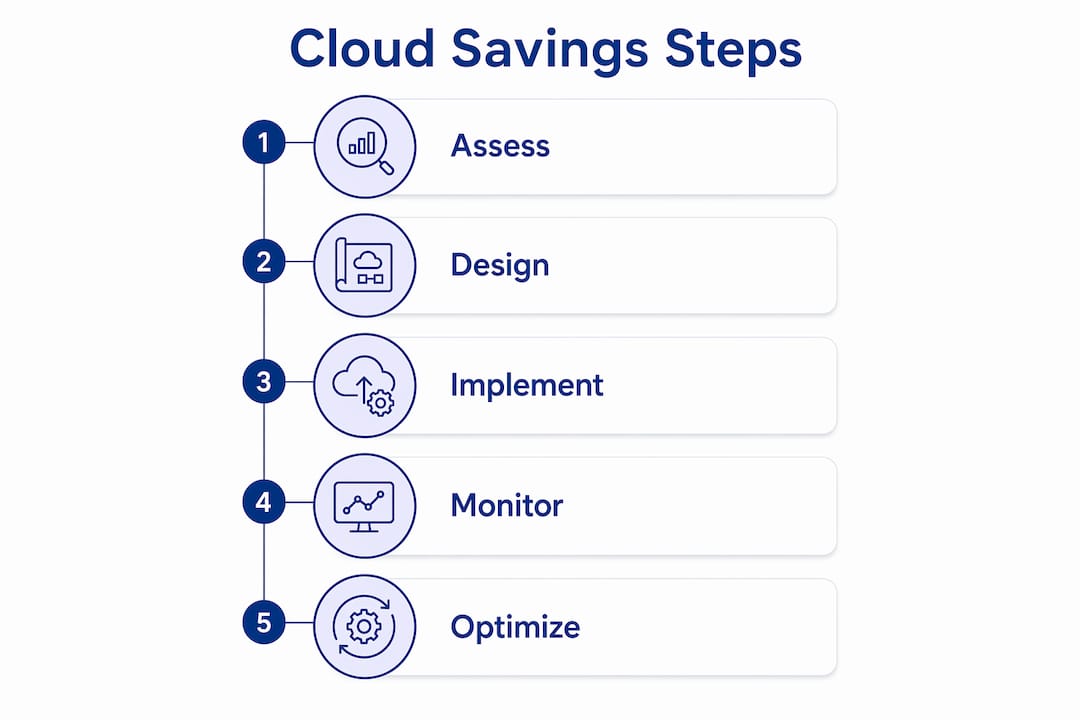
Invest in architects who are proficient in both technical design and financial translation. The ability to align cloud costs with business outcomes is not a soft skill. It is the mechanism by which architectural decisions become budget decisions. An architect who cannot communicate cost implications to a CFO is only delivering half the value.
Set up governance frameworks before problems appear. Budget alert systems, resource tagging policies, and cost allocation models should be in place from the moment a workload goes live, not retrofitted after the first surprise invoice. Cloud-native tools across AWS, Google Cloud, and Azure all support this, but they require an architect to configure them with business intent, not just technical defaults.
Encourage quarterly architectural cost audits. These are structured reviews where the architect examines the current infrastructure against current usage patterns, identifies drift from the original cost model, and proposes changes. One-off optimisation exercises deliver temporary savings. Recurring audits deliver compounding savings. For a deeper understanding of cloud total cost of ownership, IT leaders should build this into their annual planning cycle.
The top five cost-saving strategies that cloud architects drive in practice are:
- Serverless architecture adoption for event-driven workloads, eliminating idle compute costs entirely
- Containerisation with Kubernetes to improve resource utilisation across shared infrastructure
- Multi-tier storage strategies that automatically move data to cheaper tiers based on access frequency
- Reserved capacity planning aligned with 12 to 36 month business forecasts
- Architectural decomposition of monolithic applications into services sized for their actual workload
Avoiding common API cost mistakes is another area where architects add immediate, measurable value. API-driven architectures can generate significant egress and request costs that are invisible until they appear on a bill.
The uncomfortable truth about cloud architecture and cost
What I have observed repeatedly, working across enterprise cloud environments, is that the organisations with the highest cloud bills are rarely the ones with the most complex workloads. They are the ones where architecture decisions were made without anyone in the room who understood the cost consequences.
The frustrating part is that the inefficiency is usually obvious in retrospect. Oversized databases running at 15% utilisation. Storage buckets accumulating snapshots from workloads that were decommissioned two years ago. Microservices communicating across availability zones when they could sit in the same one. None of these are exotic problems. They are the predictable result of building fast without building with cost in mind.
The conventional wisdom is that you fix cloud costs by buying more discounts or implementing better tagging. That is wrong. Discounts and tagging are useful, but they cannot compensate for an architecture that was never designed to be efficient. The only durable fix is structural. It requires an architect who treats cost as a first-class design requirement, not a post-deployment concern.
What gives me genuine optimism is that the fix is not complicated once you have the right person in the role. Cloud architects who combine technical depth with financial fluency can identify and resolve the structural sources of inefficiency in ways that compound over time. The investment in the role pays back faster than almost any other cost reduction initiative I have seen. The question is not whether you can afford a cloud architect focused on cost. It is whether you can afford not to have one.
How Koritsu AI helps cloud architects unlock lasting savings
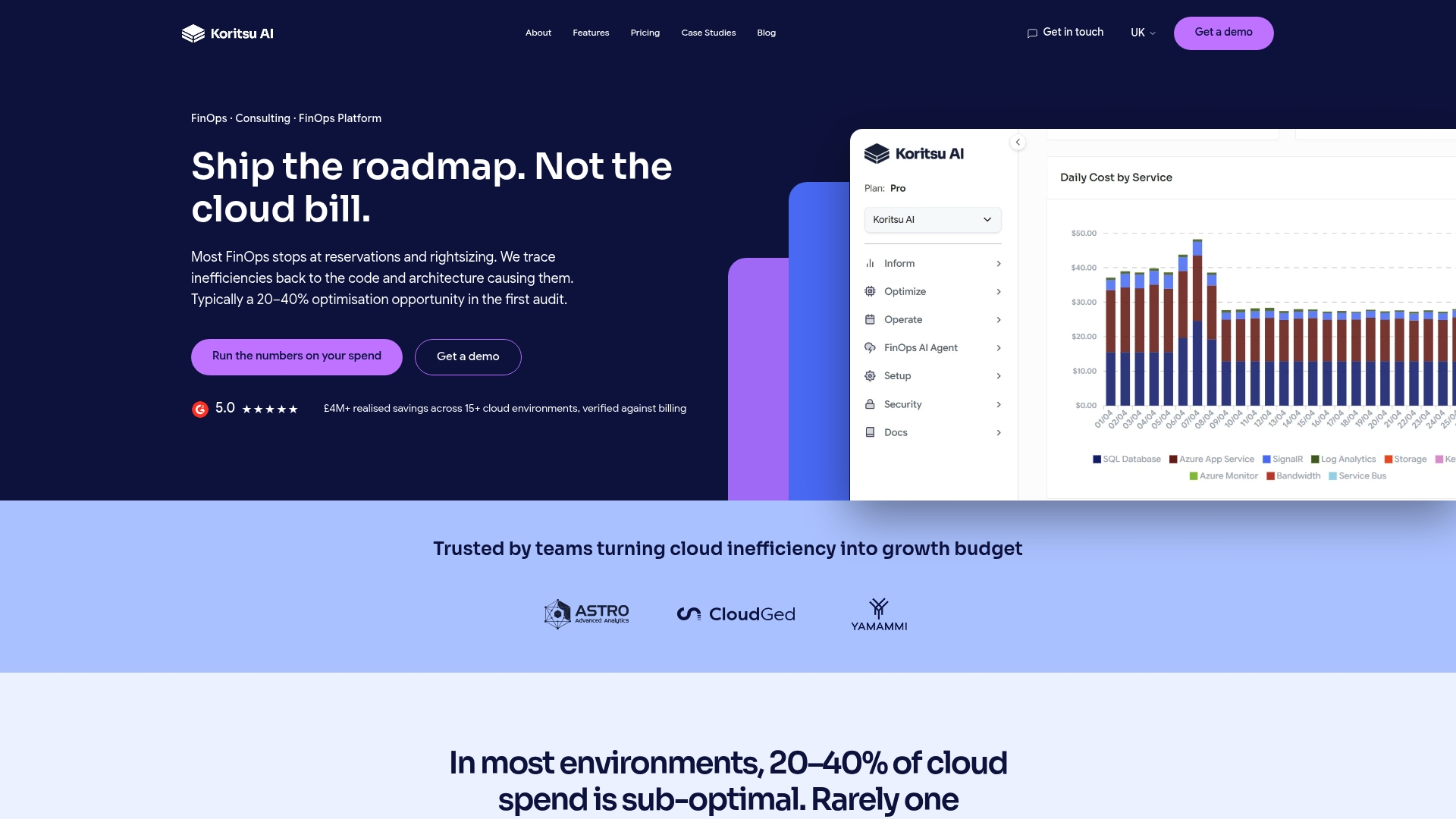
Cloud architects identify where the inefficiency is. Koritsu AI makes sure nothing is missed and that savings are sustained. The Koritsu AI platform continuously analyses cloud spending across AWS, Google Cloud, and Azure, surfacing inefficiencies that manual reviews overlook. Kori, our AI agent, flags anomalies, tracks architectural drift, and gives architects the data they need to make decisions with confidence. Our specialists work alongside your team to translate those findings into structural fixes, not just recommendations. The results speak for themselves: one UK bidding platform achieved a 52% reduction in cloud costs after working with Koritsu AI. Start with a free assessment and see exactly where your architecture is costing you more than it should.
FAQ
What is the role of a cloud architect in reducing costs?
A cloud architect reduces costs by designing infrastructure that eliminates inefficiency from the outset, using techniques such as rightsizing, reserved capacity planning, and lifecycle policies. Architectural redesigns can reduce cloud costs by up to 50% compared to unoptimised deployments.
How do cloud architects save money compared to other approaches?
Cloud architects address the structural root causes of overspend rather than applying surface-level fixes like discount purchasing. Because most cost overruns originate in architectural design, only an architect-led redesign produces durable savings.
What is FinOps and how does it relate to cloud architects?
FinOps is a financial management discipline for cloud that aligns engineering, finance, and business teams around shared cost accountability. Cloud architects define the tagging taxonomies, allocation models, and governance frameworks that make FinOps continuous budget governance operational in practice.
How often should cloud architecture be reviewed for cost efficiency?
Quarterly architectural cost audits are the standard for organisations serious about sustained savings. One-off reviews deliver temporary reductions; recurring audits catch drift and capture new savings as cloud services and workloads evolve.
Are cloud architect roles growing in demand?
Cloud architect roles are projected to grow 25% through 2034, driven by AI infrastructure complexity, multi-cloud adoption, and the growing expectation that architects will own cost governance alongside technical design.
Key takeaways
Cloud architects deliver the most durable cloud savings by treating cost as a first-class design requirement, not a post-deployment correction.
| Point | Details |
|---|---|
| Architecture drives cost outcomes | Most cloud overspend originates in design decisions, not spending behaviour or tooling gaps. |
| Savings range from 30% to 50% | Right-sizing, reserved capacity, and architectural redesign collectively reduce bills by 30 to 50%. |
| FinOps requires architect leadership | Tagging taxonomies, allocation models, and cost audits need an architect to be effective, not just a finance team. |
| Quarterly reviews sustain savings | One-off optimisation exercises lose ground within months; structured recurring audits compound savings over time. |
| Business literacy multiplies impact | Architects who translate technical costs into executive language accelerate decision-making and budget alignment. |